


Proton Black Friday, until 30 November: 75% off Proton VPN Plus on the 24-month plan.
After the first term it renews at the regular price, shown on the offer page before you pay. See every Proton Black Friday deal.
Short answer: In the proton vpn free vs plus decision, Free is the rare free VPN worth keeping for private browsing on one device, with no data cap and no ads, while VPN Plus is what you pay for once you need to choose a country, stream, torrent, or protect more than one device at a time. Plus also adds NetShield, Secure Core, port forwarding and a much larger network of 17,985 Plus servers. The upgrade is good value on the two-year plan, as long as you budget for the renewal: every paid VPN Plus term renews at $83.88 a year.
- Stay on Free if you only need one device protected on public Wi-Fi and do not care which country you appear in.
- Pick VPN Plus if you need a specific country, streaming support, P2P, or more than one device online at once.
- Pick Proton Unlimited if you would also pay for Proton Mail, Pass or Drive.
- Skip the monthly plan unless you only need Plus for a few weeks: it costs $9.99 every month.
Free: $0, 1 device, servers in 10 countries chosen for you. VPN Plus: $9.99/mo monthly; $53.88 for the first year ($4.49/mo); $83.76 for the first two years ($3.49/mo); all renew at $83.88 every 12 months. Deals page offer: $71.76 for the first two years ($2.99/mo), then $83.88/yr. Protonvpn.com, prices checked October 11, 2026.
Table of contents
What does the free plan actually include?
The free plan gives you a working, private VPN on one device with no data cap, no ads and no time limit, but it decides where you connect. Proton’s own plan explainer lists the details: servers in 10 countries, randomly selected from the Netherlands, Japan, Romania, Poland, Norway, Switzerland, Singapore, Mexico, Canada and the United States; one device connected at a time; unlimited data; and the same audited no-logs policy that covers paid users. It also lists DNS leak protection, IPv6 leak prevention, a kill switch and strong encryption on the free tier, so the protection itself is not watered down.
That last point is what separates Proton’s free plan from most free VPNs. The usual free VPN either caps your data at a few gigabytes a month or pays for itself with advertising. Proton’s free VPN page says its free plan “has no data or speed limits,” shows no advertisements and does not log your online activity, and that the free service “is supported by paying users.” Its support article on data limits says the same thing in plainer words: all Proton VPN users, including those on the free plan, have unlimited bandwidth and data.
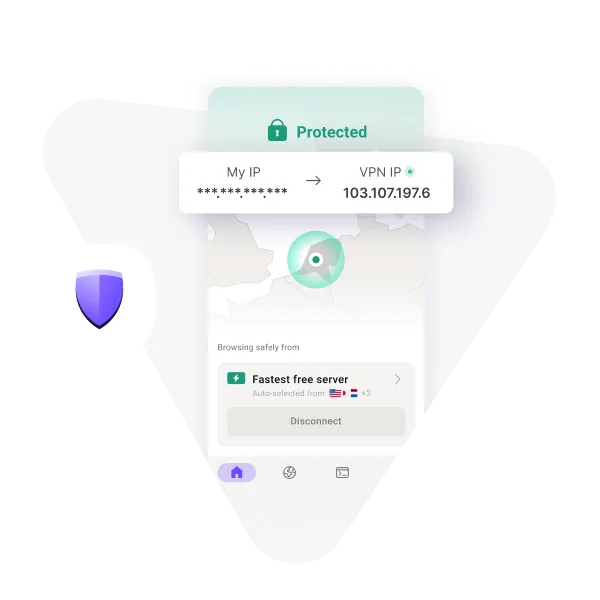
The free VPN page also lists the Stealth protocol among the features available to everyone. Stealth is Proton’s protocol for networks that try to block VPN traffic, which matters if you are on a restrictive workplace or hotel network. Proton says its VPN is used by activists and journalists around the world, and it frames the free plan as part of that mission rather than as a trial. Unlike a trial, it does not expire.
The limits you will notice
The first limit is choice. When you connect on the free plan, Proton’s support page on changing servers says it connects you to “the fastest free server for your location.” You can ask for another server, but Proton picks it at random, and there is a cooldown: 45 seconds after the first change, then 10 minutes between each change after that. In practice you get a fast, private connection somewhere in those 10 countries, but you cannot say “put me in Canada” and rely on it.
The second limit is one device at a time. A phone and a laptop cannot both be connected on the same free account simultaneously. There is one useful exception: Proton’s router guide says router connections are available on every plan including Free, and that the router counts as only one connection on a free plan no matter how many devices sit behind it. If you have a router that supports OpenVPN or WireGuard as a client, the whole household can share one free connection, with the trade-off that you then manage the VPN on the router rather than in an app.
The third limit is speed class. The pricing page labels the free plan “Medium VPN speed” and the paid plans “Highest VPN speed.” Proton’s speed guide explains why without claiming it throttles anyone: it says it has “no bandwidth limits or bandwidth throttles, even for free users,” but paid connections are generally faster because the Plus network is much larger and less loaded, it covers more countries, and many Plus servers sit on 10 Gbps networks. The free VPN page says every Proton VPN server delivers at least 1 Gbps of bandwidth, so “medium” is not slow in absolute terms; it is slower than the paid tier on a busy evening.
What does VPN Plus add?
VPN Plus adds control over where you connect, more devices, and the features that most people actually buy a VPN for. The plan explainer lists more than 20,000 servers in more than 140 countries, speeds up to 10 Gbps, up to 10 devices connected at the same time, the NetShield ad, malware and tracker blocker, streaming support, P2P and BitTorrent support, Secure Core servers and split tunneling. On the day we checked, Proton’s server list counted 20,799 servers in 149 countries across 196 locations, of which 17,985 are Plus servers reserved for paying users and 124 are Secure Core servers.
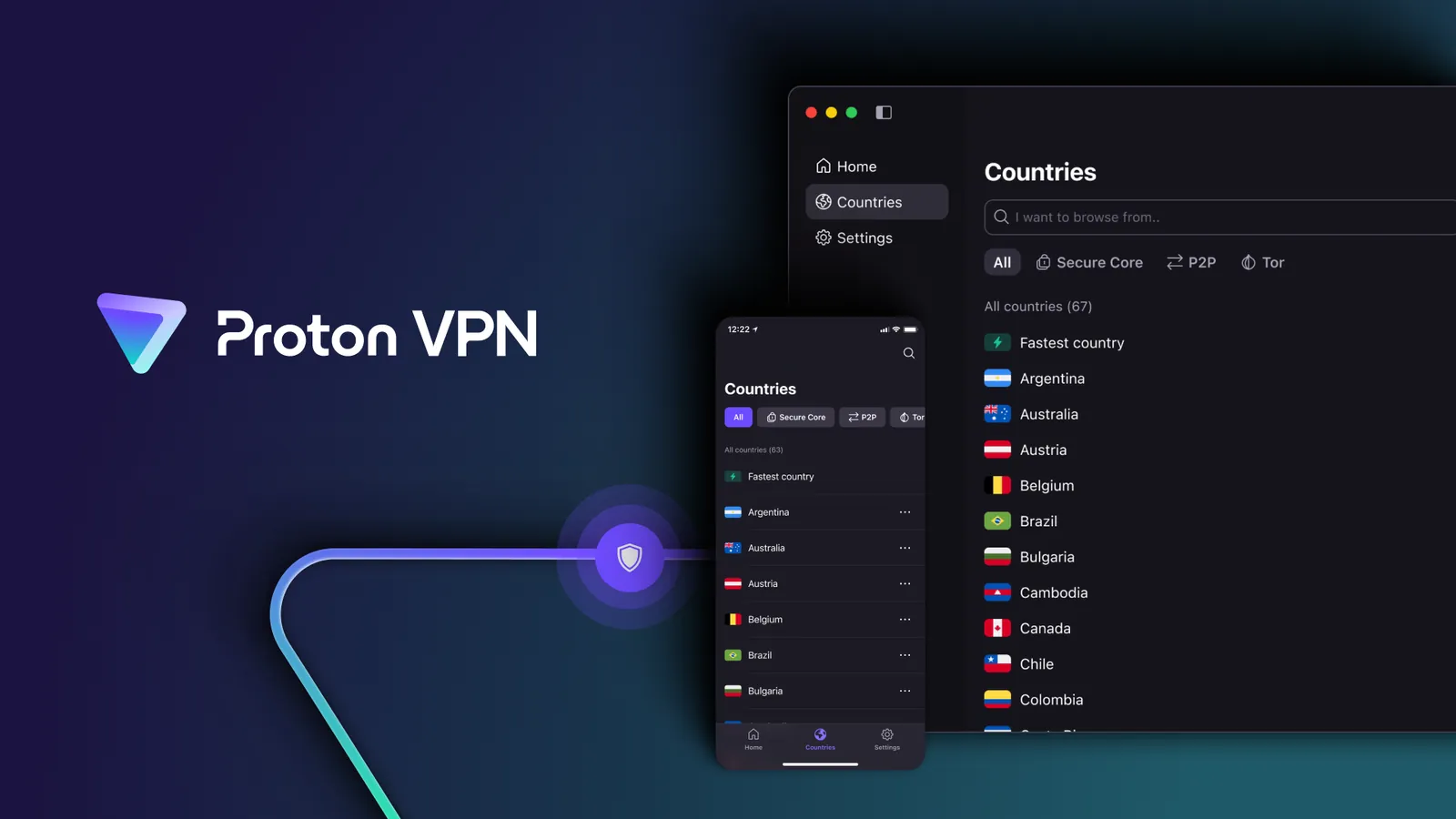
The features that matter most
- Country choice. You can connect to any country, city or server in the list, which is the precondition for streaming a home service while travelling or for testing how a site looks from another region.
- Ten devices. One account covers a family’s phones, laptops and a TV at the same time.
- Streaming support. The server list says Plus servers support services “such as Netflix, Disney+, Prime Video, and many others.” Support for a given service can change, and streaming platforms set their own terms.
- P2P and port forwarding. Torrent traffic is allowed on P2P servers, and port forwarding, which Proton documents for its Windows, macOS and Linux apps, is limited to paid plans.
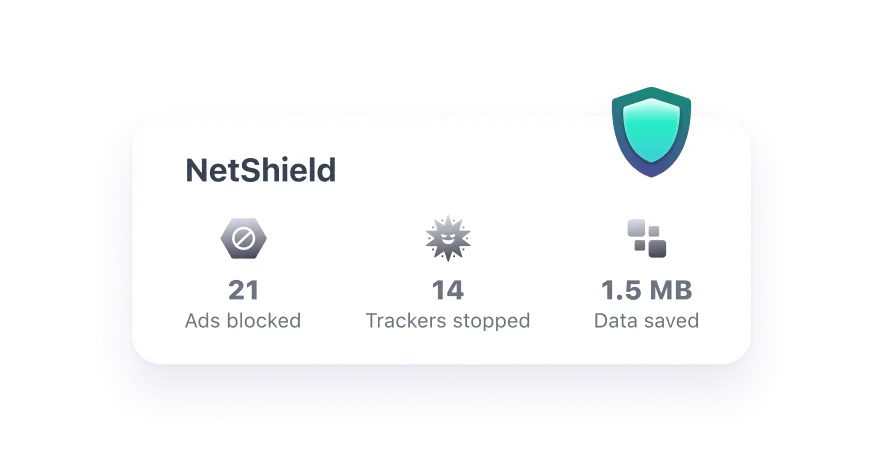
- NetShield. A DNS filter that blocks ads, trackers and malware domains.
- Secure Core. Proton’s double VPN, which routes traffic through a hardened server in Switzerland, Iceland or Sweden first. It is slower by design and most people will rarely switch it on.
- Moderate NAT. Proton’s support page lists this gaming-focused setting, called NAT Type 2 on PlayStation, as available to everyone on a paid plan.
The pricing page also lists “Priority support and live chat” on VPN Plus. Free users still have the help centre and the contact form, but if you expect to need fast answers, that is a real difference.
How do the two plans compare feature by feature?
Both plans protect the connection the same way; the difference is reach, convenience and extras. This table is built from the pricing page, the plan explainer and the relevant support pages, all read on October 11, 2026.
| Feature | Proton Free | VPN Plus |
|---|---|---|
| Price | $0 | From $2.99/mo on a two-year deal, renews at $83.88/yr |
| Devices at once | 1 | 10 |
| Server countries | 10, chosen for you | 149 on the server list, your choice |
| Changing server | Random, 45 second then 10 minute cooldown | Any server, any time |
| Data limit | None | None |
| Speed class on the pricing page | Medium | Highest |
| Ads in the app | None | None |
| No-logs policy, kill switch, DNS leak protection | Yes | Yes |
| Stealth protocol | Yes | Yes |
| Streaming support | No | Yes |
| P2P and BitTorrent | No | Yes, on P2P servers |
| Port forwarding and moderate NAT | No | Yes |
| NetShield ad and malware blocker | No | Yes |
| Secure Core | No | Yes |
| Split tunneling | Not listed | Yes |
| Router use | Yes, counts as one connection | Yes |
| Priority support and live chat | No | Yes |
Read the table from the bottom up and the proton vpn free vs plus pattern appears. Nothing about safety is held back on the free plan: you get the no-logs policy, the kill switch and leak protection either way. What Plus sells is choice and capability. If you never need either, Free is a complete product. If you need even one of them, the free plan cannot be worked around, because the server choice and the device limit are fixed.
For a full assessment of the service itself, including its no-logs audits and the transparency report, our Proton VPN review covers the ground this comparison deliberately skips.
What does VPN Plus cost, and what does it renew at?
VPN Plus costs $9.99 a month on monthly billing, and the yearly and two-year plans are cheaper in the first term but renew at $83.88 a year. Proton prints both figures on every plan card, which is more than many VPN companies do. These are the US dollar prices on the pricing page on October 11, 2026:
| Billing period | First payment | Monthly equivalent | Renews at | Discount label shown |
|---|---|---|---|---|
| 1 month | $9.99 | $9.99 | $9.99 every month | None |
| 1 year | $53.88 | $4.49 | $83.88 every 12 months | 55% off, save $66 |
| 2 years | $83.76 | $3.49 | $83.88 every 12 months | 65% off, save $156 |
| 2 years, deals page offer | $71.76 | $2.99 | $83.88 every 12 months | 70% off, save $168 |
The deals row comes from Proton’s separate VPN deals page, which on October 11, 2026 showed VPN Plus at $2.99 a month for two years, billed at $71.76 for the first 24 months and renewing at $83.88 every 12 months. Promotions change, so check which offer you are actually shown at checkout.
The renewal price is where the arithmetic matters. On the one-year plan, $53.88 becomes $83.88 in year two, about 56 percent more, or $6.99 a month. On the two-year plan, the first 24 months cost $83.76, which is $41.88 a year; the renewal of $83.88 covers just 12 months, so the price per year roughly doubles from year three. Neither is a trick, since Proton states it plainly, but the headline “$3.49 a month” only describes the first term.
All paid plans carry a 30-day money-back guarantee, and Proton’s plan explainer says you can try any paid plan “risk-free” and ask for a refund if it is not for you. That makes the sensible order of operations simple: use Free until you hit a limit, then buy the longest term you are comfortable with and use the first month to confirm that streaming, P2P or whatever forced the upgrade actually works for you. If you are at that point now, compare the current VPN Plus offers and note the renewal line on the card you choose.
The VPN and Pass bundle
The deals page also listed a “VPN x Pass Plus” bundle at $4.99 a month on two years, billed at $119.76 for the first 24 months and renewing at $107.88 every 12 months. It adds Proton Pass Plus, the password manager with unlimited hide-my-email aliases. It only makes sense if you were going to pay for a password manager anyway; on its own merits as a VPN purchase, VPN Plus is cheaper.
What does Plus cost over one, two and three years?
Because first terms and renewals differ, the honest comparison is the total over the time you will actually keep the VPN. The figures below are our arithmetic from the prices above, assuming Proton does not change its renewal price in the meantime.
| How you pay | 1 year | 2 years | 3 years | 3 year monthly average |
|---|---|---|---|---|
| Free | $0 | $0 | $0 | $0 |
| Monthly | $119.88 | $239.76 | $359.64 | $9.99 |
| 1 year plan, then renewals | $53.88 | $137.64 | $221.64 | $6.16 |
| 2 year plan, then renewal | $83.76 (paid up front) | $83.76 | $167.64 | $4.66 |
| 2 year deals page offer, then renewal | $71.76 (paid up front) | $71.76 | $155.64 | $4.32 |
Three conclusions follow. First, monthly billing is only sensible for a short, known need, such as one trip abroad: three years of it costs more than twice the two-year route. Second, the two-year plan wins at every horizon longer than about a year, even after its renewal kicks in. Third, the gap between the two-year offers is small: the deals page price saves $12 over the regular two-year price, which is worth taking if it is offered to you but not worth hunting for.
The flip side of the two-year plan is commitment. You pay $83.76 or $71.76 up front, and the money-back guarantee covers only the first 30 days. If you are not sure you will still want a VPN in 2028, the one-year plan at $53.88 is the lower-risk way in, at the cost of a higher renewal sooner.
Which limits actually force the upgrade?
Most people upgrade for one of five reasons, and each maps onto a single free-plan limit that cannot be worked around. If none of them describes you, keep your money.
You need to appear in a specific country
The free plan picks the country for you from its list of 10. If you want to watch your home country’s streaming service on holiday, use a banking site that only works from home, or check prices in another region, you need Plus. Changing servers on Free will not get you there reliably, because the next server is random and the cooldown grows to 10 minutes.
You want to stream
Streaming support is listed only on Plus servers. Proton keeps a list of supported services on its streaming pages, and a VPN does not override a service’s own terms of use, so check both the list and the service’s rules for the country you are in.
You torrent legal files
P2P traffic is limited to dedicated P2P servers on paid plans. Linux distributions, open-source software and public domain archives are all commonly distributed over BitTorrent, and if that is your use, Plus gives you P2P servers and port forwarding for better connectivity.
You have more than one device to protect at once
A free account protects one device at a time. A couple who both want their phones protected on café Wi-Fi need either two free accounts, a VPN router, or a single Plus account covering up to 10 devices. For a family, Plus is the tidy answer.
You game or need fewer connection problems
Proton’s moderate NAT setting, which Proton says can fix multiplayer connection problems caused by strict NAT, is available only on paid plans, as is port forwarding. If you play online through the VPN and have trouble joining or hosting games, the free plan has no fix for that.
When is the free plan enough?
The free plan is enough when your goal is privacy on one device and you do not care where you appear to be. That covers more people than VPN marketing suggests. A student who wants their laptop protected on campus and café Wi-Fi, someone who wants their internet provider to stop seeing which sites they visit, or a traveller who only needs a secure connection in a hotel all fit inside the free plan’s limits.
It is also a good fit as a permanent backup. Because there is no time limit and no data cap, you can keep Proton VPN Free installed on a second device and switch it on when you need it, without the nagging upgrade screens that come with capped plans. Proton’s site says it shows no advertisements on the free plan, and in its own words the free plan exists so that “those who need it most” can access the internet privately.
A few signs that you have outgrown it: you find yourself pressing the change server button repeatedly to land in a particular country; you are logging out on one device so you can connect on another; or a site you need keeps treating you as a visitor from the wrong region. Each of those is the free plan doing exactly what it says, and each is a reason to upgrade rather than to fight it.
If you are using the free VPN as part of a wider move away from big-tech services, our guide to how to de-Google your life shows where a VPN fits next to private email, storage and passwords.
Is Proton Unlimited a better upgrade than VPN Plus?
Proton Unlimited is a better upgrade only if you would also use Proton Mail, Pass or Drive. On the pricing page it costs $12.99 a month monthly, $119.88 a year ($9.99 a month), or $191.76 for the first two years ($7.99 a month), and both the yearly and two-year terms renew at $119.88 a year. It includes everything in VPN Plus plus the premium tiers of Proton Mail, Calendar, Drive and Pass, with 500 GB of storage, 15 email addresses, three custom domains and unlimited hide-my-email aliases according to the comparison table.
The price difference over three years is the clearest way to see it. VPN Plus on the two-year plan, renewed once, costs $167.64. Proton Unlimited on the same basis costs $311.64. The extra $144 over three years buys a full encrypted email, storage and password manager suite. If you would pay for even one of those separately, Unlimited usually comes out ahead; if you only want the VPN, it does not. Our analysis of whether Proton Unlimited is worth it goes through those combinations app by app.
One practical detail from Proton’s plan explainer: you cannot hold two Plus subscriptions on the same account, for example VPN Plus and Mail Plus together. If you already pay for Mail Plus and now want the VPN, Unlimited is the route Proton intends, rather than a second subscription.
Common mistakes when upgrading
- Reading the monthly equivalent as the price. $3.49 a month is the two-year first term; the renewal is $83.88 a year.
- Buying monthly for a long need. Over three years, monthly billing costs $359.64 against $167.64 on the two-year plan.
- Upgrading for safety you already have. The kill switch, leak protection and no-logs policy are on the free plan too.
- Testing streaming after the refund window. Check the service you care about inside the 30-day guarantee.
- Forgetting the router option. If all you need is a whole-home connection and you own a compatible router, the free plan counts it as one device.
Frequently asked questions
Is Proton VPN Free really unlimited?
Yes, in data and time. Proton says all users, including free users, have unlimited bandwidth and data, and the free plan does not expire. The limits are elsewhere: one device at a time, servers in 10 countries picked for you, and a “medium” speed class on the pricing page.
Which countries can I use on the free plan?
Proton’s plan explainer lists the Netherlands, Japan, Romania, Poland, Norway, Switzerland, Singapore, Mexico, Canada and the United States. You are connected to the fastest free server for your location, and if you change server, Proton picks the next one at random with a cooldown between changes.
How much does VPN Plus cost after the first term?
Every paid VPN Plus term renews at $83.88 every 12 months, which is $6.99 a month. That applies whether you started on the one-year plan at $53.88, the two-year plan at $83.76, or the deals page offer at $71.76. Monthly billing stays at $9.99 a month.
Is Plus faster than Free?
Generally, yes. Proton says it does not throttle free users, but paid connections tend to be faster because the Plus network is much larger and less loaded, covers more countries, and many Plus servers are on 10 Gbps networks. Actual speed always depends on your own connection and distance to the server.
Can I stream or torrent on the free plan?
No. Streaming support and P2P are paid features. P2P traffic is only allowed on dedicated P2P servers, which free users cannot select. If you torrent, use it for legal content such as Linux distributions and open-source software.
Can I try VPN Plus before committing?
Every paid plan carries a 30-day money-back guarantee. Proton’s plan explainer says that if a paid plan is not for you, you can tell Proton and get a refund. Use that month to test the specific reason you upgraded.
Does the proton vpn free vs plus choice affect privacy?
Not in the basics. Both plans share the audited no-logs policy, kill switch, DNS and IPv6 leak protection and strong encryption. Plus adds optional privacy features such as Secure Core and NetShield, but a free user is not logged or tracked more than a paying one.
Should you upgrade?
Settle the proton vpn free vs plus question by the limit you hit rather than by the feature list. If you need one private connection and do not care where you appear, the free plan is good enough to keep indefinitely, with no data cap, no ads and the same protection paying users get. If you need a particular country, streaming, P2P, gaming fixes or more than one device at once, the free plan cannot stretch to it and Plus is the answer.
When you do upgrade, the two-year plan is the cheapest way to hold VPN Plus for any period longer than a year, but plan for the $83.88 yearly renewal that follows it. When you are ready, see Proton VPN Plus pricing, pick the term you will actually use, and test the reason you upgraded within the 30-day guarantee.
8.7 Score
Pros
- The free plan has no data cap, no ads and no time limit, with the same no-logs policy and kill switch as paid plans.
- VPN Plus adds country choice across 149 countries, 10 devices, streaming, P2P, NetShield and Secure Core.
- Every plan card prints the renewal price next to the first payment.
- A 30-day money-back guarantee covers every paid term.
Cons
- Free users cannot pick a country, and changing server has a cooldown of up to 10 minutes.
- Every VPN Plus term renews at $83.88 a year, well above the $3.49 or $2.99 a month first-term rates.
- The free plan protects only one device at a time unless you set it up on a router.
- Monthly billing at $9.99 costs more than twice the two-year route over three years.
Final Verdict
Proton VPN Free is one of the few free VPNs worth keeping: unlimited data, no ads, and the same protection paying users get, on one device in a country chosen for you. VPN Plus is the upgrade when you need country choice, streaming, P2P or more devices, and the two-year plan is the cheapest way to hold it. Budget for the $83.88 yearly renewal that follows every first term.