



Proton Black Friday, until 30 November: 75% off Proton VPN Plus on the 24-month plan, $59.76 for the first 24 months.
After that it renews at $83.88 a year, the regular price. See every Proton Black Friday deal.
Short answer: Of the independent VPN providers, Proton VPN is our top pick: it is run by Proton AG, a Swiss company whose primary shareholder is the non-profit Proton Foundation, it has passed five annual no-logs audits, and it has a free plan, while many big-name VPNs, including ExpressVPN, CyberGhost and Private Internet Access, belong to Kape Technologies, and NordVPN sits in the Nord Security group alongside Surfshark.
- Pick Proton VPN if you want an independent provider whose primary shareholder is a non-profit, audits, a free plan and the widest features.
- Pick Mullvad if you want a founder-owned VPN that needs no email and charges a flat €5 a month.
- Pick IVPN or Windscribe if you prefer a small founder-run company in Gibraltar or a self-funded one in Canada.
- Do not rule out group-owned VPNs on ownership alone: judge them on audits and policy too, but know who you are trusting.
Proton VPN Plus: $9.99/mo monthly; $53.88 for the first 12 months, then renews at $83.88 a year; $83.76 for the first 24 months, then renews at $83.88 a year. Free plan: yes, 1 device. 30-day money-back guarantee. Protonvpn.com, prices checked October 11, 2026.
Table of contents
Why does it matter who owns your VPN?
A VPN provider can see more about your online life than almost any other company, so who owns it, and who could buy it next, matters as much as its privacy policy. When you connect, your internet provider stops seeing which sites you visit, but the VPN company’s servers carry that traffic instead. You are moving trust from one company to another. A no-logs policy and an audit tell you what the provider promises and what an auditor found on a given date; ownership tells you who sets the priorities, who can change the policy, and what other businesses sit under the same roof.
The VPN market has consolidated sharply over the last decade. Several of the most advertised brands now belong to a handful of groups, and some of those groups also own the kind of comparison and review websites that rank VPNs. None of that proves a group-owned VPN is unsafe, and some of them have strong audit records. It does mean that a reader comparing “independent” reviews of “competing” VPNs may be looking at sister companies.
This guide does two things. First, it maps who owns which VPN, using press releases, regulatory filings and the companies’ own pages, and drops any ownership claim we could not source. Second, it ranks the independent VPN providers that remain, with Proton VPN as the top pick. In the interest of the same transparency: TruePick earns a commission if you subscribe to Proton through our links, which is exactly the kind of relationship we think readers should know about. If you are rethinking which big companies handle your data more generally, our guide to how to de-Google your life covers email, storage and passwords too.
Which big groups own which VPNs?
Four groups account for many of the best-known consumer VPN brands: Kape Technologies, Nord Security, Ziff Davis and Pango Group. The table summarises what each group’s own pages, filings or announcements say today.
| Group | VPN brands | Other holdings relevant to VPN buyers | Based in |
|---|---|---|---|
| Kape Technologies | ExpressVPN, Private Internet Access, CyberGhost VPN (ZenMate has joined CyberGhost) | Intego Antivirus; Webselenese, a portfolio of comparison websites | London, United Kingdom |
| Nord Security group | NordVPN, Surfshark (operates autonomously); Atlas VPN until 2024 | NordPass, NordLayer, NordLocker; Surfshark’s Incogni, Ironwall and Optery | Group formed with Surfshark in 2022 |
| Ziff Davis | IPVanish, StrongVPN | CNET, PCMag, Mashable, ZDNET, Lifehacker | United States (listed company) |
| Pango Group | Hotspot Shield, Betternet, Touch VPN, Ultra VPN, VPN 360 | Financial Shield, Privacy Shield and other “Shield” products | Spun off from Aura in 2024 |
Kape Technologies: ExpressVPN, CyberGhost and Private Internet Access
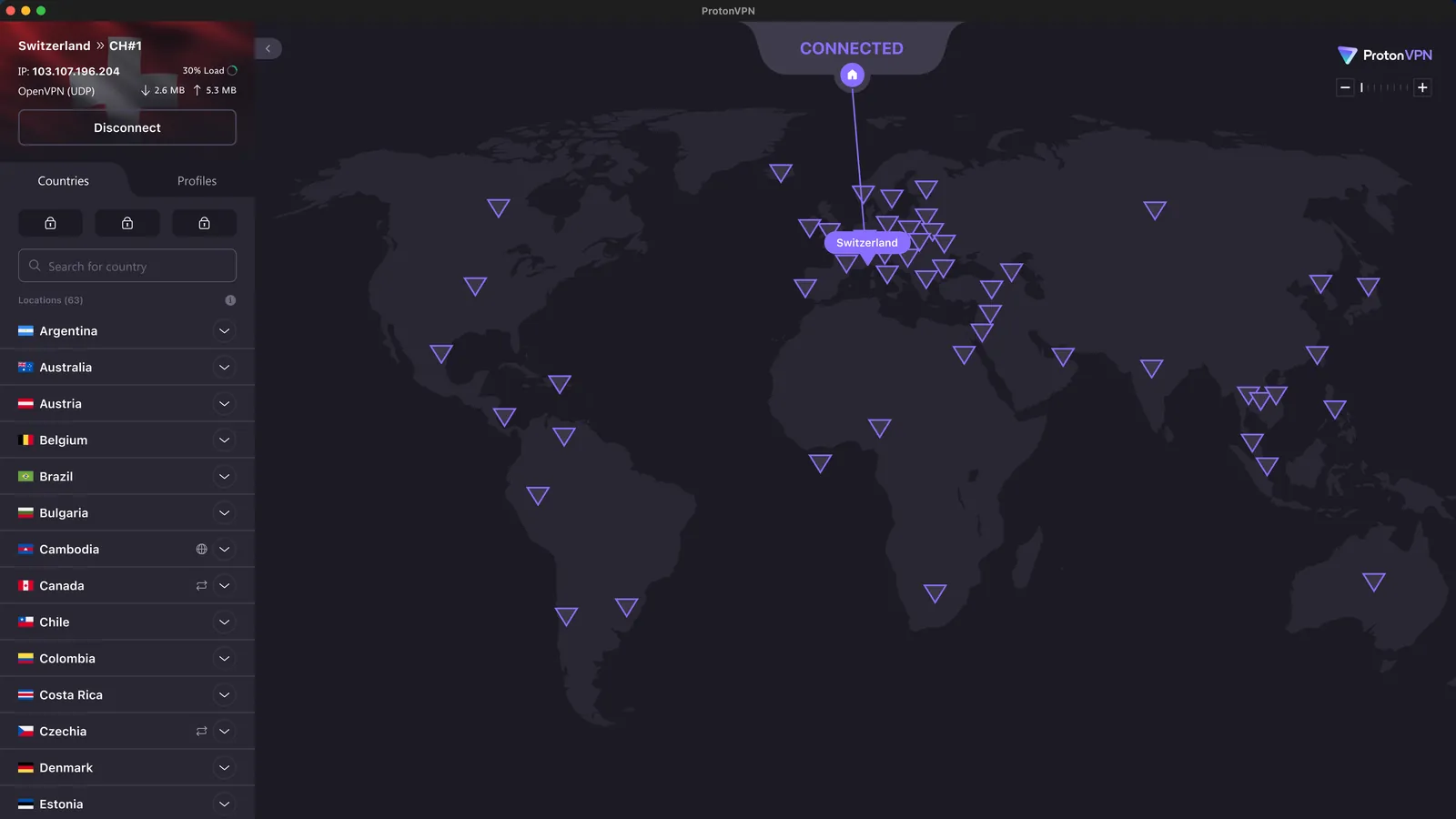
Kape is the largest consolidator. In September 2021, Kape announced that ExpressVPN would join it “as part of a US$936 million deal,” and ExpressVPN confirmed on its own blog in December 2021 that it had officially joined Kape. ExpressVPN said its customer data would continue to be held in its own entity, under British Virgin Islands jurisdiction, and Kape said ExpressVPN would continue to operate day to day as an independent service with its existing leadership. Tom’s Guide reported at the time that the deal made ExpressVPN a stablemate of Private Internet Access, CyberGhost and ZenMate. Today, Kape’s “Our brands” page lists ExpressVPN, Private Internet Access, CyberGhost VPN, Intego Antivirus and Webselenese, and describes Kape as headquartered in London. ZenMate’s own site now says it is joining forces with CyberGhost.
Kape itself changed hands in 2023. A regulatory announcement from April 2023 says Unikmind had acquired or agreed to acquire about 79.69 percent of Kape’s shares and asked Kape to cancel its listing on London’s AIM market. Cyprus Business Now reported that Unikmind is owned by businessman Teddy Sagi and that the offer valued Kape at $1.6 billion.
Nord Security: NordVPN and Surfshark
NordVPN’s about page describes it as supported by the wider Nord Security ecosystem, and Nord Security’s own about page lists NordVPN among its products along with NordPass, NordLayer and NordLocker. In February 2022, NordVPN’s blog announced that Nord Security and Surfshark had finalized a merger agreement, adding that the two would continue to operate autonomously, with separate infrastructure and product roadmaps. Nord Security later described the arrangement as forming “a group of companies” with Surfshark. Nord Security also took over Atlas VPN, whose paid subscribers were moved to NordVPN on April 24, 2024. Surfshark, for its part, has bought into personal data removal: its blog says it brought in Ironwall in 2024 and acquired Optery in September 2026, alongside its Incogni service. Nord Security has outside investors: its 2023 funding announcement names Warburg Pincus, Novator Ventures and Burda Principal Investments.
Ziff Davis: IPVanish and StrongVPN
In 2019, J2 Global, now Ziff Davis, acquired VPN and privacy assets from StackPath, including IPVanish and StrongVPN, TechRadar reported. Ziff Davis’s annual report for 2025, filed with the US Securities and Exchange Commission in February 2026, describes IPVanish as one of the leading VPN services and lists CNET, PCMag, Mashable, Lifehacker, Spiceworks and ZDNET among its technology brands. The IPVanish and StrongVPN websites both describe themselves as “a Ziff Davis company.” Ziff Davis sold its Connectivity division in 2026, but we found no sale of its VPN brands.
Pango Group: Hotspot Shield and Betternet
Aura bought Pango, the company behind Hotspot Shield, in 2020. In September 2024, Aura announced it had split into two standalone companies, Aura and Pango Group, and listed Pango’s brands as including Betternet, Hotspot Shield, Touch VPN, Ultra VPN and VPN 360, among others.
Do VPN owners also own review sites?
Yes, in at least two cases that the owners document themselves. Kape bought Webselenese in 2021: Globes reported the price as $149.1 million and described Webselenese as a collection of product comparison sites, and Kape’s own AGM statement confirms the acquisition completed in March 2021. Kape’s brand page still lists Webselenese, describing it as a portfolio of comparison websites focused on privacy and security content. Ziff Davis, which owns IPVanish and StrongVPN, also owns PCMag, CNET and ZDNET, some of the most widely read technology review sites.
That does not mean any particular review on those sites is biased, and many review teams work independently of their parent company’s other businesses. It does mean that when you see a VPN ranked highly, it is reasonable to ask who owns the site and who owns the VPN. Proton raised the wider issue years ago in a 2019 blog post, saying that many supposedly independent VPN reviews are paid for or sponsored. Proton is not a neutral party here, and neither are we: this site earns affiliate commission, which is why we source every ownership claim to a company page, filing or news report and leave out anything we could not confirm.
Which VPN providers are still independent?
Several well-known independent VPN providers are owned by their founders or by a non-profit, not by a larger VPN group. The table lists what each company’s own pages say.
| Provider | Operating company | Country | Ownership, in the company’s words |
|---|---|---|---|
| Proton VPN | Proton AG | Switzerland | Primary shareholder is the non-profit Proton Foundation |
| Mullvad | Mullvad VPN AB, parent Amagicom AB | Sweden | 100% owned by founders Fredrik Strömberg and Daniel Berntsson |
| IVPN | IVPN Limited | Gibraltar | Founder and CEO is 100% owner |
| Windscribe | Windscribe Limited | Canada (Ontario) | Self-funded, no venture capital |
| AirVPN | A company that operates only AirVPN | Italy | Founded to run the project’s fiscal side |
Independence is not the same as quality, and size is not the same as trustworthiness. A small founder-owned VPN can still have weak apps, and a group-owned one can have strong audits. But independents have one structural advantage: their only business is the VPN, or a closely related privacy suite, so there is no sister company with a different business model to answer to.
Why is Proton VPN the top pick?
Proton VPN is the top pick among independent VPN providers because it combines an ownership structure designed to resist a sale, five annual no-logs audits, a public legal record, open source apps and the most complete feature set of the group, including a free plan.
Who owns Proton
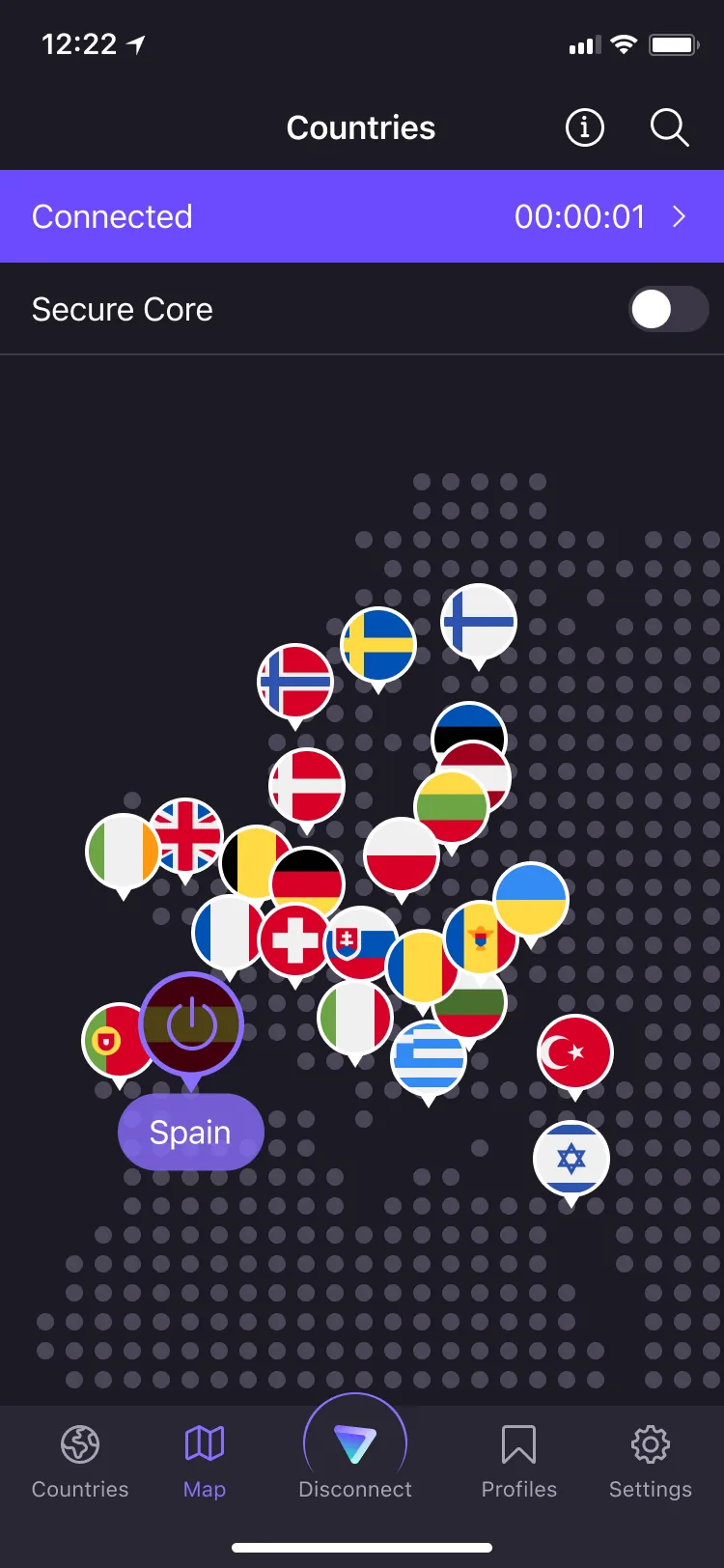
Proton’s about page says its services are operated by Proton AG, a Swiss corporation whose primary shareholder is the non-profit Proton Foundation, based in Geneva. Proton explained the change in a June 2024 blog post on the Proton Foundation: transfers and commitments from Proton’s founders made the foundation Proton’s primary shareholder, and as the largest voting shareholder, “no change of control can occur without the consent of the foundation.” The foundation’s own page says it is a Swiss non-profit and “does not have shareholders.” In plain terms, Proton cannot be quietly sold to a VPN consolidator without the foundation agreeing. Proton describes the foundation as its primary and largest voting shareholder; it does not say the foundation owns a majority of the economic shares, so we do not either.
What backs up the privacy claims
Proton says its VPN has passed a fifth consecutive annual third-party audit of its no-logs policy, carried out by Securitum, with the latest report dated May 2026. Its transparency report lists all 59 legal orders for Proton VPN data in 2025 as denied. Its apps are open source; our roundup of the best open source VPN services covers the code and audits in detail.
What you get
VPN Plus covers 10 devices, servers in more than 140 countries, streaming, P2P and an ad and malware blocker. The free plan covers one device with no data cap, on servers in 10 countries chosen for you, which makes Proton the easiest of these providers to try before paying. Proton also sells Mail, Drive, Pass and Calendar, so it is a privacy company with several products rather than a VPN-only shop; for people who use those too, that is a convenience rather than a conflict. Our Proton VPN review covers the service in depth.
How do Mullvad, IVPN and Windscribe compare?
Mullvad: founder-owned and anonymous by design
Mullvad’s about page says Mullvad VPN AB and its parent Amagicom AB are 100 percent owned by founders Fredrik Strömberg and Daniel Berntsson, who are actively involved in the company, which is based in Gothenburg, Sweden. It is the purest example of independence in this list. Mullvad asks for no email, charges €5 a month on every term and allows five devices. It is our pick for anyone who values anonymity above features; it has no free plan and no port forwarding.
IVPN: one owner, Gibraltar
IVPN’s team page says its founder and CEO is the 100 percent owner of IVPN Limited, and its footer says the company is registered in Gibraltar. IVPN has been around since 2009, requires no email to sign up, and publishes its apps as open source. Its plans start at $60 a year for five devices. The main reservation is that its last audit of the VPN infrastructure itself was in February 2023.
Windscribe: self-funded, Canada
Windscribe’s terms identify Windscribe Limited, registered in Ontario, Canada, as the owner, and its about page says the company is self-funded, with no venture capital. It allows unlimited devices and has a free plan with 10 GB a month once you confirm an email address. Its paid plan is $9 a month or $69 a year.
AirVPN: an honourable mention
AirVPN’s about page says a dedicated company was founded in 2012 to run the fiscal side of the project, that the company operates only AirVPN, and that it pays no one for favourable reviews. Its footer carries an Italian VAT number. We have not reviewed its apps or audits here, so we list it for completeness rather than rank it.
What do the independent VPNs cost?
Proton VPN Plus costs $3.49 a month on a two-year plan and renews at $83.88 a year, while Mullvad, IVPN and Windscribe charge flat prices. Prices are from each provider’s own pricing page on October 11, 2026.
| Provider and plan | Monthly billing | Longer term | Renews at | Devices | Free plan |
|---|---|---|---|---|---|
| Proton VPN Plus | $9.99 | $53.88 first year; $83.76 first two years | $83.88 a year | 10 | Yes, 1 device |
| Mullvad | €5 (about $5.60) | €5 a month on every term | Same flat price | 5 | No |
| IVPN Standard | $6 | $60 a year | Not stated on the plan page | 5 | No |
| Windscribe Pro | $9.00 | $69 a year | Not stated on the plan page | Unlimited | Yes, 10 GB a month with a confirmed email |
Proton’s first-term prices are introductory: on the one-year plan you pay $53.88 and then $83.88 a year, or $6.99 a month. Over three years, the two-year plan followed by one renewal comes to $167.64, about $4.66 a month. Proton Unlimited, which adds Mail, Drive and Pass, costs $191.76 for the first two years and then $119.88 a year. To compare today’s offers, check Proton VPN’s current prices; every paid plan has a 30-day money-back guarantee. Our Proton VPN Free vs Plus guide explains what the upgrade adds.
How can you check who owns a VPN?
You can check a VPN’s ownership yourself in about fifteen minutes, and it is worth doing before you commit to a two-year plan:
- Read the legal footer and terms. The company named in the terms of service is the one you contract with. Look for phrases such as “a Ziff Davis company” or a group name in the copyright line, as IPVanish, StrongVPN and NordVPN show.
- Look up the parent’s brand page. Groups usually list their brands proudly: Kape’s “Our brands” page and Nord Security’s about page both do.
- Search for acquisition announcements. Deals of this size come with press releases and, for listed companies, regulatory announcements that name the price and the buyer.
- Check filings for listed parents. Ziff Davis’s annual report to the SEC names its VPN and review brands in the same document.
- Check who owns the review site, too. If a “best VPN” list ranks one group’s brands at the top, see whether the site belongs to the same group.
- Prefer audits and legal records over slogans. Ownership is one signal; published audits and transparency reports are another, and the strongest providers have both.
Ownership can change, too. ZenMate and Atlas VPN were both folded into larger sister brands after their acquisitions, and Kape itself applied to leave London’s AIM market in 2023 after Unikmind’s takeover. It is worth rechecking once a year, particularly before a long renewal.
Frequently asked questions
Who owns ExpressVPN?
Kape Technologies. Kape announced the US$936 million deal in September 2021, and ExpressVPN confirmed in December 2021 that it had officially joined Kape. Kape’s brand page still lists ExpressVPN in 2026, alongside Private Internet Access and CyberGhost VPN.
Are NordVPN and Surfshark the same company?
They are in the same group. Nord Security and Surfshark finalized a merger agreement in 2022, and Nord Security describes the result as a group of companies. Both say they continue to operate autonomously, with separate infrastructure and product roadmaps.
Who owns Proton VPN?
Proton AG, a Swiss company. Its primary shareholder is the non-profit Proton Foundation in Geneva, which Proton says has to consent to any change of control. The foundation itself has no shareholders.
Is Mullvad independent?
Yes. Mullvad says Mullvad VPN AB and its parent company Amagicom AB are 100 percent owned by its two founders, who are actively involved in running it from Gothenburg, Sweden.
Is a group-owned VPN less safe?
Not automatically. Ownership is one factor among several. A group-owned VPN can have strong audits, and a small independent one can have weak apps. What ownership changes is who sets priorities, and whether the same group also owns sites that review VPNs.
Does Kape own VPN review sites?
Kape owns Webselenese, which it acquired in 2021 and describes on its brand page as a portfolio of comparison websites about privacy and security. Globes reported the price at the time as $149.1 million.
Which should you choose?
Proton VPN is our top pick among independent VPN providers. Its primary shareholder is a Swiss non-profit that must consent to any change of control, its no-logs policy has passed five annual audits, its transparency report shows every 2025 legal order for VPN data denied, and it offers a free plan alongside a full-featured VPN Plus. Plan for the renewal: VPN Plus costs $83.76 for the first two years and then $83.88 a year.
Mullvad is the right choice for anyone who wants a founder-owned VPN with no email and a flat price, and IVPN and Windscribe are credible small alternatives. If ownership is the reason you are switching, start with Proton VPN’s free plan and upgrade once you have tested it on your own devices.
8.7 Score
Pros
- Primary shareholder is the non-profit Proton Foundation, which must consent to any change of control.
- Five annual Securitum no-logs audits and all 59 legal orders for VPN data in 2025 denied.
- Open source apps and a free plan with no data cap.
- 10 devices, servers in more than 140 countries, streaming and P2P on VPN Plus.
Cons
- VPN Plus renews at $83.88 a year after the introductory term.
- Needs an email address, unlike Mullvad and IVPN.
- Proton sells several products, so it is not a VPN-only company.
- Proton describes the foundation as its primary shareholder, not as majority owner.
Final Verdict
Proton VPN is the top pick among independent VPN providers: a Swiss company whose primary shareholder is a non-profit foundation that must approve any change of control, five annual no-logs audits, a clean 2025 legal record and a free plan. Mullvad is the founder-owned choice for anonymity. ExpressVPN, CyberGhost and PIA belong to Kape, and NordVPN sits with Surfshark in Nord Security.