

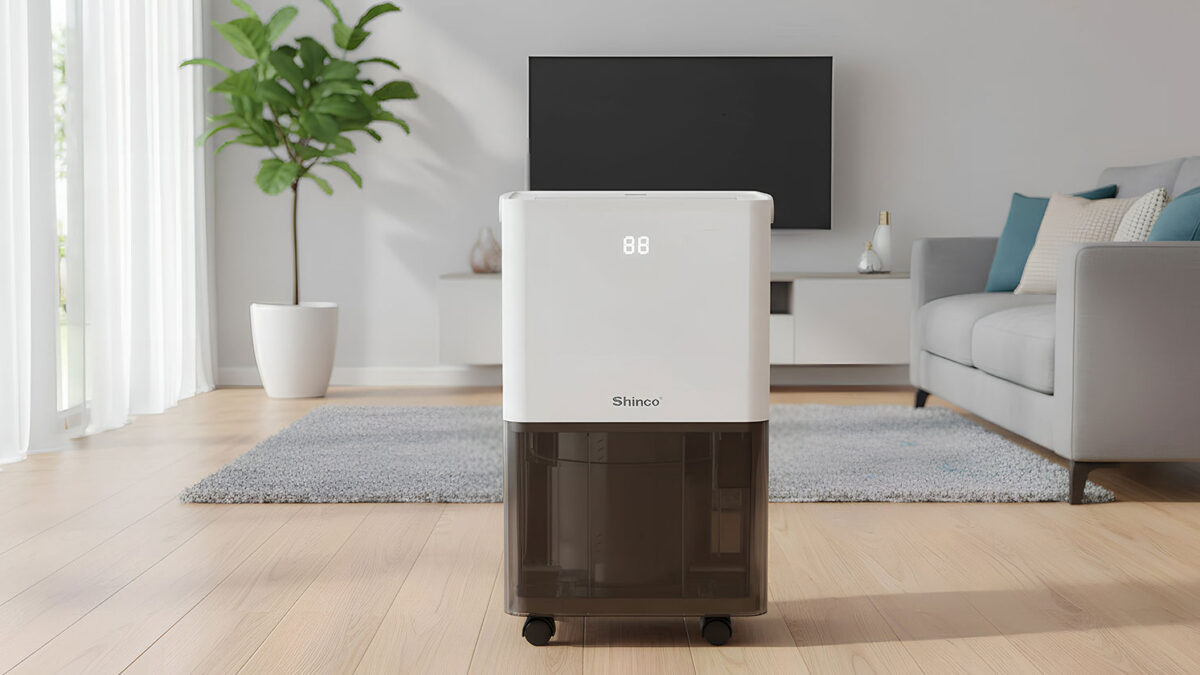
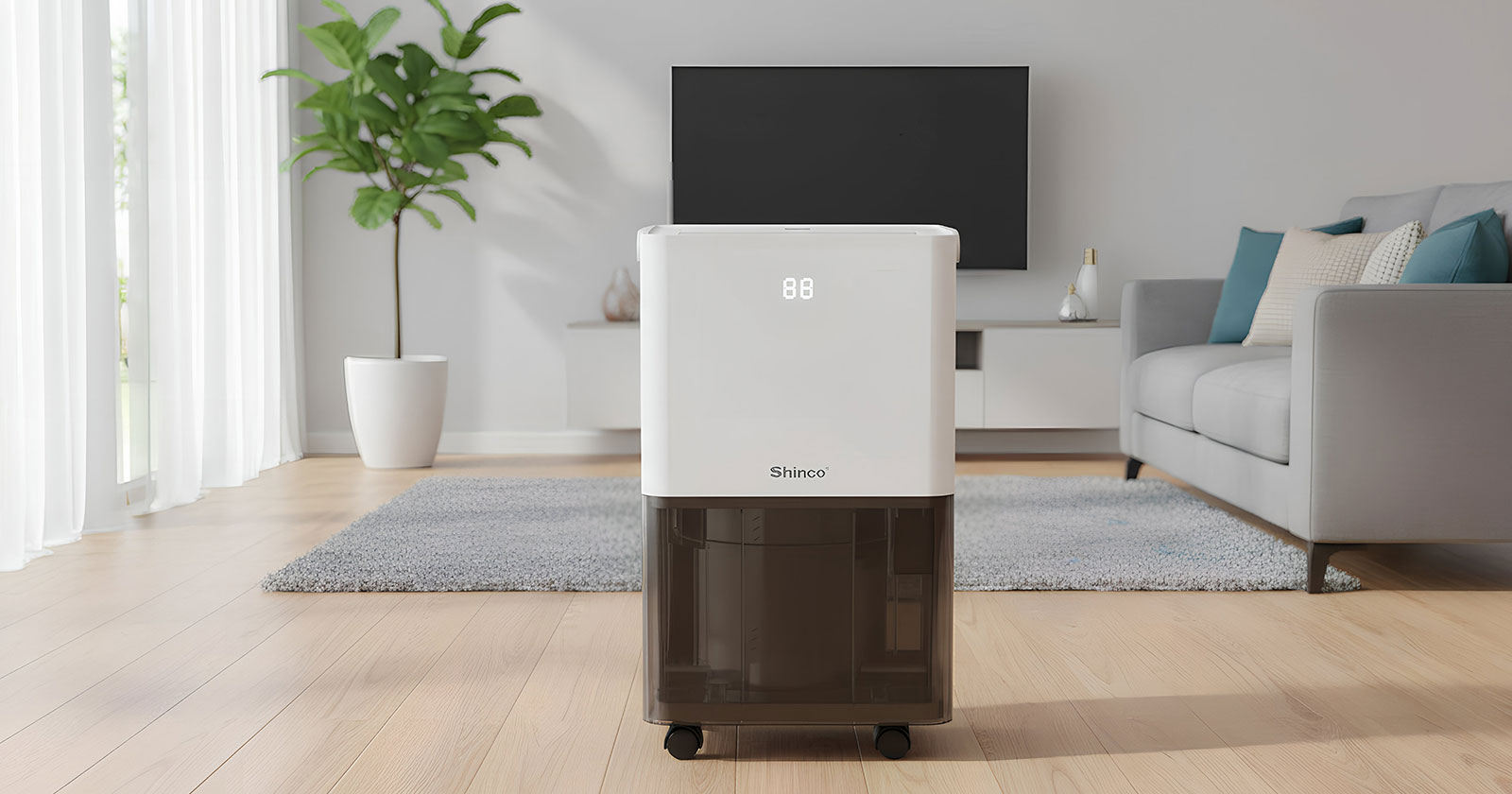
Shinco SDL5-10D Review: The Compact 10L/Day Dehumidifier That Solves Everyday Damp, If You Use It in the Right Space
As an Amazon Associate, TruePick earns from qualifying purchases.
Buying a dehumidifier is usually not a “fun gadget” decision. It’s a practical one, made after you notice window condensation, a musty smell in the bedroom, laundry that takes forever to dry indoors, or that creeping worry about mold in a bathroom or small basement. The Shinco SDL5-10D is built for exactly that kind of real-life problem: steady moisture removal in smaller rooms, without the bulk (or price) of larger 20–30L machines. It’s a compressor-based unit rated at up to 10 liters per day, with an adjustable humidistat, a washable pre-filter plus an activated carbon filter, a timer, and a hose option for continuous drainage.
Here’s the straight verdict: this is a smart buy if your damp problem is happening in a small-to-medium room, think a bedroom, laundry corner, small basement space, office, or bathroom (with safe placement), and you want a set-it-and-forget-it solution that targets a specific humidity level. It’s not the right pick if you’re trying to dry laundry in a large open-plan area, control humidity in a big cellar, or aggressively dehumidify a whole floor of a house. In those cases, you’re better off with a higher-capacity unit that can keep up without running constantly.
If you’re already leaning toward it and want to verify current pricing and stock, you can check the Shinco SDL5-10D listing on Amazon first, because value matters a lot in this category, and prices can swing.
Table of Contents
- Quick take: who it’s for (and who should skip it)
- Quick specs overview (table)
- Deep-dive performance: moisture removal, noise, laundry drying, filters
- Real-world usage scenarios (3 detailed setups)
- Common buying mistakes + how to avoid them
- Alternatives, buyer guidance, and FAQ
Shinco SDL5-10D review: quick take, best-fit rooms, and expectations
What the SDL5-10D is trying to do (in plain English)
The Shinco SDL5-10D is a compact compressor dehumidifier designed to pull moisture out of the air efficiently in smaller spaces. Compressor dehumidifiers generally excel at steady, everyday moisture control, especially in typical indoor temperatures, because they condense water from humid air onto cold coils, collect it in a tank, and blow drier air back into the room. Shinco’s own manuals describe this process in an easy-to-understand way: it works like a “vacuum” for moist air, pulling air in, removing moisture, then reheating and releasing it back out so the room gradually dries out.
For you as a buyer, the important part is not the physics lesson. It’s the practical result: if your room is persistently above comfortable humidity (often 60%+), a unit like this can bring it down toward a healthier, more comfortable target (typically around 45–55% for many homes). Lowering humidity helps reduce condensation, slows mold growth, and makes indoor laundry dry faster because the air has more “capacity” to absorb moisture.
Quick specs overview
| Spec / Feature | What it means for daily use |
|---|---|
| Moisture removal rating | Up to 10L per day (best case). Real-world output depends on humidity and temperature. |
| Recommended room size | Best for small-to-medium spaces (often cited around ~15 m² class rooms, depending on conditions). |
| Adjustable humidistat | Set a target humidity (commonly 30–80% in steps). The unit cycles to maintain it. |
| Modes | Auto (target humidity) and Continuous (keeps running), plus fan speed choices. |
| Noise | Compressor-based, with a “quiet” low fan mode; manufacturer notes peak around the high-30s dB range in ideal conditions. |
| Tank + auto shutoff | Collects water in a removable tank and stops when full to prevent overflow. |
| Continuous drain option | Hose drainage lets you run it longer without emptying the tank (great for basements/laundry). |
| Filtration | Washable pre-filter + activated carbon filter to help with dust and musty odors. |
| Timer + child lock | Set run time (often 1–24 hours) and lock controls to avoid accidental changes. |
Who should buy it (and who shouldn’t)
- Buy it if you need steady humidity control in a bedroom, office, small basement room, laundry nook, or bathroom-adjacent area and you want a target-humidity auto mode.
- Buy it if your main goal is preventing condensation/musty smells and helping laundry dry faster in a modest space.
- Buy it if you like having a carbon filter option for stale or damp odors and want a simple continuous-drain setup.
- Skip it if you need to dehumidify a large open-plan area or a big cellar, 10L/day class units can feel undersized and run constantly.
- Skip it if your room is very cold most of the time; compressor units can lose efficiency at low temperatures (they can still work, just less effectively).
- Skip it if you want ultra-silent operation for a very quiet bedroom; it’s “quiet for a compressor dehumidifier,” but it’s not silent.
Setting expectations: the “10 liters per day” reality
Almost every dehumidifier disappointment comes from one misunderstanding: the max liters-per-day rating is measured under favorable test conditions (warm-ish, very humid air). In real homes, output can be much lower if humidity is moderate, temperatures are cooler, doors are open, or the space is larger than the unit is designed for. That doesn’t mean the dehumidifier is bad, it means the environment isn’t the best-case scenario.
The SDL5-10D performs best when you treat it like a room tool, not a whole-house solution. Put it in the problem room, close the door as much as possible, set a realistic target humidity (often 50–55% is a good starting point), and let it run long enough to stabilize the space. If you do that, you’re far more likely to get the “wow” result buyers expect.
A quick note on mold and humidity safety
Lowering indoor humidity is one of the simplest ways to reduce mold risk and improve comfort. For general guidance, it’s worth reading authoritative indoor air advice on moisture control and mold prevention, such as the EPA’s overview on mold and moisture: EPA mold resource. The key takeaway is consistent: moisture control is prevention.
Deep-dive review: performance, build quality, usability, drainage, and long-term reliability
Moisture removal performance: what you’ll actually notice day-to-day
If you place the Shinco SDL5-10D correctly, the first difference you’ll notice is not a dramatic “waterfall” into the tank. It’s the room feeling less clammy and the air smelling cleaner. Within a few hours in a damp room, you often see humidity drop on the display, especially if the starting humidity is high (think 65–75%). Over a day or two, you should see a larger effect: less window condensation in the morning, less musty odor, and fewer “cold damp” vibes in textiles and soft furnishings.
What makes the SDL5-10D particularly useful for everyday homes is the adjustable humidistat and auto mode behavior. In the manual, Shinco describes an auto mode where the unit stops when the target humidity is reached and resumes when humidity rises again. That matters because a dehumidifier that can cycle intelligently feels less intrusive and often saves energy compared to a unit you leave running continuously without control.
Continuous mode has its place, too. If you’re dealing with a basement corner that is consistently damp, or you’re trying to accelerate laundry drying in a closed room, continuous mode is the “brute force” option. The unit keeps extracting moisture regardless of the measured humidity. Just remember: if you run continuous mode without a drain hose, you’ll be emptying the tank more often.
Noise and bedroom use: “quiet enough” depends on your tolerance
Noise perception is personal. Compressor dehumidifiers produce a blend of fan airflow and compressor hum. Shinco highlights a low-fan option designed to be less disturbing for sleep or work, and the official product description points to a peak noise figure around the high-30 dB range under certain conditions. That’s the kind of number that sounds great on paper, but your room acoustics, floor vibrations, and placement can matter just as much.
Here’s the practical rule that makes this unit easier to live with:
- Use low fan speed at night if you’re in the same room.
- Place it on a stable surface and consider a rubber mat if your floor resonates (the manual explicitly suggests a mat or carpet to reduce vibration noise).
- Keep clearance around the unit (Shinco recommends space around the sides/back and top) so the fan doesn’t sound strained.
If you’re extremely sensitive to noise while sleeping, you may prefer to run it in the evening and morning rather than overnight. If you’re more “normal household tolerant,” you’ll likely find low mode acceptable, especially if the alternative is damp air and mold risk.
Laundry drying: what it can do well (and where it falls short)
One of the most common reasons people buy a 10L/day dehumidifier is indoor laundry drying. The SDL5-10D can help laundry dry faster by pulling moisture from the air so the room can keep absorbing water from wet clothes. The key is the setup: you want a closed-ish space where humidity would otherwise spike. If you dry clothes in a hallway with doors open and air moving through the whole house, the dehumidifier is fighting a bigger battle.
To get the best results:
- Dry clothes in a smaller room or closed laundry area when possible.
- Run continuous mode or set a lower humidity target (but don’t chase ultra-low humidity; it can be inefficient).
- Use a drying rack position that allows airflow, and don’t block the dehumidifier’s intake/exhaust.
For a single rack in a smaller room, the SDL5-10D can feel like a “cheat code” in damp seasons. For multiple racks in a big open-plan space, it will help, but you may want a higher capacity unit.
Filters and “air freshness”: what the carbon filter is good for
Let’s be clear: this is not an air purifier designed to capture ultra-fine particles the way a dedicated HEPA purifier does. But the combination of a washable pre-filter and an activated carbon filter can be genuinely useful for a damp home. The pre-filter catches dust and lint (especially relevant if you’re running it near laundry). The carbon filter can help reduce musty odors and stale air smells that often accompany humidity issues.
This matters most in:
- Small basements or storage rooms where “damp smell” lingers
- Bedrooms where textiles hold onto moisture and odor
- Laundry spaces where damp air plus fabric can smell stale
Maintenance is simple: keep the pre-filter clean, and replace the carbon filter as recommended. A clogged filter can reduce airflow and efficiency, and it can increase perceived noise because the fan works harder.
Usability and controls: what’s actually nice about the interface
Dehumidifiers are the kind of product you don’t want to babysit. The SDL5-10D’s usability wins come down to a few basics: a readable display, simple buttons, and modes that behave predictably. According to the manual, you can set humidity in increments, switch between auto and continuous modes, choose fan speed, run a timer, and lock the controls by holding a button for a few seconds (useful if kids like pressing buttons).
One detail that matters more than people expect is auto shutoff and restart behavior. When the tank is full, the unit stops and prevents overflow. If you’re using continuous drainage, you avoid tank-full stops and can run longer, which is ideal for basements or longer laundry sessions. Some documentation also mentions auto-restart behavior after power interruptions, useful if you live in an area with occasional outages.
Continuous drainage: the feature that turns it into a “basement tool”
Continuous drainage is where a compact dehumidifier stops feeling like a “gadget you empty” and starts feeling like an appliance. If you can place the unit near a drain (floor drain, sink, or a suitable container lower than the unit’s drain outlet), you can set it up with a hose and run longer without thinking about it.
For many buyers, this is the difference between “I used it for a week” and “I actually fixed my damp problem.” The practical advice is simple:
- Make sure the hose route slopes downward so water can flow out by gravity.
- Don’t kink the hose or route it upward.
- Check the first few hours to confirm steady draining.
Once you have continuous drain working, this becomes a low-maintenance humidity control solution, especially in small basements or storage rooms.
Build quality and portability: compact, practical, not “luxury”
At this price and capacity class, you should expect a functional plastic build rather than premium materials. The important part is how it feels to live with: can you move it, is the tank easy to remove and empty, does it feel stable, and does it hold up to regular use? The SDL5-10D is commonly described as compact and manageable for room-to-room use. It’s not featherlight (compressor units have weight), but it’s practical for repositioning as your needs change between seasons.
One long-term reliability point worth mentioning is proper placement and operating range. Shinco’s documentation specifies an operating temperature window (commonly around 5°C to 35°C in the manual). If your space is colder than that for long stretches, performance may drop significantly. If you need dehumidification in very cold spaces, you’ll want to consider units designed specifically for that environment.
Energy use and “is it worth running?”
Dehumidifiers cost money to run, but damp also costs money, through mold risk, damaged items, and discomfort that leads to more heating and ventilation “hacks.” The SDL5-10D sits around the 200W class in some spec listings, which is a reasonable range for a compact compressor dehumidifier. Whether it’s “worth it” depends on how you run it. Using auto mode with a realistic target humidity often delivers the best balance: the unit runs hard when the room is damp, then cycles down once humidity stabilizes.
If you want to maximize efficiency:
- Close doors/windows in the problem room while it runs.
- Don’t set the humidity target excessively low (you’ll make it run longer for diminishing returns).
- Keep filters clean for airflow and efficiency.
Value for money: when this is a great buy (and when it isn’t)
The Shinco SDL5-10D is at its best when priced like a true “small-room problem solver.” If you can buy it at a strong deal price, it’s one of the simplest ways to improve comfort and reduce damp-related issues. If it’s priced close to larger 12–20L units from reputable brands, you should pause and compare, because capacity is often the main limiter, and paying slightly more for a bigger unit can save frustration long-term in larger spaces.
If you want to sanity-check today’s price before you decide, you can see the current SDL5-10D price and delivery options here. If it’s substantially cheaper than higher-capacity alternatives, it’s easier to recommend, especially for small rooms and targeted moisture control.
Real-world usage scenarios (detailed)
Scenario 1: Bedroom with morning condensation (winter humidity creep)
This is one of the most satisfying use cases. In winter, many bedrooms develop condensation because warm indoor air meets cold windows, and the room holds moisture overnight from breathing. The dehumidifier’s job here isn’t to turn your bedroom into a desert. It’s to keep humidity in a comfortable zone so condensation reduces and the room smells fresher.
- Setup: Place the unit with clearance around it, away from curtains and walls.
- Mode: Auto mode with a target around 50–55%.
- Timing: Run it in the evening and early morning; use low fan speed at night if needed.
What you should expect: less window condensation, fewer “damp textile” smells, and more comfortable sleep if humidity was previously high. What you should not expect: silent operation like a fanless device, there will be some sound.
Scenario 2: Laundry drying in a small closed room (the “why didn’t I do this sooner” setup)
Drying clothes indoors is brutal in humid seasons. The air saturates quickly, and clothes stay damp for far longer, sometimes developing that unpleasant stale smell. Here, the SDL5-10D works well because you’re creating a contained humidity problem that it can solve.
- Setup: Put the drying rack in a small room, close the door, and place the dehumidifier a safe distance from the rack (don’t block airflow).
- Mode: Continuous mode or auto mode with a lower target (around 45–50%).
- Drain: If possible, use continuous drainage so you’re not emptying the tank mid-session.
Expected result: faster drying, less stale odor, and less moisture spreading through the rest of the home. Limitations: if you’re drying multiple heavy loads at once, a 10L/day unit may still take time, capacity matters.
Scenario 3: Small basement storage room (musty smell, damp boxes, mild mold risk)
Basements are classic humidity traps. Even if there’s no active leak, cooler air plus limited ventilation creates a space where moisture lingers. A small dehumidifier can transform a basement storage room from “I hate going down there” to “it’s fine.”
- Setup: Place the unit near the center of the space with recommended clearance; avoid corners where airflow is restricted.
- Mode: Auto mode at 50% for maintenance. Use continuous mode for an initial “dry down” if the room is very damp.
- Drain: Continuous drainage is strongly recommended for basement use.
Expected result: less musty odor, fewer damp surfaces, and a more stable humidity environment for stored items. Limitations: if the basement is large or connected to multiple rooms, you may need a higher capacity unit or multiple units.
Common buying mistakes (and how to avoid them)
- Mistake: Buying a 10L/day unit for a whole floor or large basement.
Fix: Match capacity to space. For larger areas, consider 16–20L+ or a dedicated basement unit. - Mistake: Running it with doors and windows open “for fresh air.”
Fix: Dehumidifiers work best in contained spaces. Ventilate strategically, then close up while the unit runs. - Mistake: Setting humidity to the lowest number because “lower is better.”
Fix: Start around 50–55% for comfort. Chasing very low humidity increases runtime for little benefit. - Mistake: Ignoring placement clearance.
Fix: Follow clearance guidance from the manual so airflow isn’t restricted and noise stays reasonable. - Mistake: Forgetting filter maintenance.
Fix: Clean the pre-filter regularly and replace carbon filters as needed for efficiency and odor control. - Mistake: Not using continuous drain when you should.
Fix: If you’re dehumidifying a basement or drying laundry often, continuous drainage reduces hassle dramatically.
Alternatives, buyer guidance, FAQ, and final verdict
Alternatives (choose based on your real problem, not brand hype)
Alternative 1: A 12–16L/day compressor dehumidifier (better for bigger rooms and heavier laundry use)
If your space is bigger than a typical bedroom or you frequently dry laundry indoors, stepping up to a 12–16L/day class unit often provides noticeably faster humidity control. The benefit isn’t just “more liters.” It’s less continuous running and quicker recovery after humidity spikes (like after a shower or a wet laundry load).
Alternative 2: A 20–25L/day unit for basements (best for persistent damp and larger cellars)
For large basements, persistent damp, or multi-room cellar spaces, a 20–25L/day unit can be a better long-term solution. You’ll usually get higher airflow, more robust drainage design, and less frustration because the unit can keep up without running 24/7.
Alternative 3: Desiccant dehumidifier (better in colder spaces, different trade-offs)
If your problem space is very cold, like an unheated garage or a winter basement, desiccant units can perform more consistently in low temperatures compared to compressor models. The trade-off is often higher energy use per liter and a different type of sound profile. If cold-room performance is your priority, it’s worth considering.
Alternative 4: A combined dehumidifier + air purifier setup (if allergies/particles are also a big concern)
The SDL5-10D includes basic filtration and a carbon filter for odors, but it’s not a HEPA-grade purifier. If you care deeply about fine particles (allergies, smoke, dust), you may want a dedicated air purifier alongside dehumidification rather than expecting one device to do both.
Buyer guidance: three questions that decide whether you’ll be happy
- 1) How big is the problem room, really?
If it’s a single room around the “small-to-medium” range, a 10L/day unit is often enough. If it’s bigger or open-plan, go up in capacity. - 2) Is your space cold most of the time?
If yes, compressor performance can drop. Consider how often your space sits below the lower operating range. - 3) Are you willing to keep doors closed while it runs?
If yes, you’ll get much better results. If no, you may need more capacity to compensate.
FAQ (7 buyer questions answered)
How much water will it actually collect per day?
It depends on humidity and temperature. In very humid, warmer conditions, it can approach its rated capacity. In normal homes with moderate humidity or cooler temperatures, output is lower. The best way to judge is whether it brings your room humidity down to your target and keeps it stable, because comfort and mold prevention are the real goals.
Is the Shinco SDL5-10D good for drying laundry?
Yes, especially in a small closed room. The key is controlling the environment: close the door, let the unit run continuously or to a lower target humidity, and ideally use continuous drainage so you’re not emptying the tank mid-dry.
Is it safe to use in a bathroom?
Many people use dehumidifiers near bathrooms, but you should keep it away from direct water splashes and follow safe indoor placement guidelines. A practical approach is to run it in an adjacent space or at a safe distance after showering, rather than placing it right next to a wet area.
Will it help with musty smells?
Lowering humidity helps reduce the “damp” environment that creates musty odor. The activated carbon filter can also help with odors, but the biggest improvement usually comes from consistent moisture control over days and weeks.
Do I need to leave it running all the time?
Not necessarily. Auto mode exists so you can set a target humidity and let the unit cycle. In damp seasons or basements, many people run it daily. In drier months, you may only need it occasionally.
What humidity setting should I use?
A good starting point is around 50–55% for comfort. If you’re drying laundry, you might go slightly lower. If you set it too low, it may run longer than needed for minimal additional benefit.
What’s the biggest reason people end up disappointed?
Using a 10L/day unit in a space that’s too large or too open. Dehumidifiers are capacity tools. When the unit matches the room, results feel impressive. When it’s undersized, it feels like “it never stops” and still can’t hit the target.
Final verdict: should you buy the Shinco SDL5-10D?
If your goal is reliable humidity control in a small-to-medium room, the Shinco SDL5-10D is a strong, sensible choice. It offers the features that actually matter, adjustable humidity targets, auto cycling, continuous drainage, practical filtration, and enough capacity to make a noticeable difference in bedrooms, laundry rooms, and small basement spaces. The main limitation is also straightforward: it’s a 10L/day class unit, and capacity is everything in damp environments. Match it to the right room, and it can feel like a permanent “quality of life” upgrade.
If you want to double-check today’s price and whether delivery works for your area, you can view the latest Amazon listing for the Shinco SDL5-10D here. For the right-sized space, it’s one of the simplest ways to beat condensation, musty air, and slow indoor laundry drying without turning your home into a construction project.
8.4 Score
Pros
- Hits comfortable humidity targets reliably
- Continuous drain option reduces hassle
- Carbon filter helps with stale odors
- Compact size fits small rooms
- Auto mode saves runtime once stable
Cons
- Undersized for large basements/open-plan areas
- Compressor hum may bother light sleepers
- Performance drops in colder rooms
- Tank emptying can be frequent without hose
- Not a substitute for true HEPA air purification
Final Verdict
The Shinco SDL5-10D is a smart buy for targeted humidity control in small-to-medium rooms, especially if you want auto humidistat cycling and the option to run continuous drainage. It’s best for bedrooms, laundry nooks, and compact basement spaces where damp and musty smells are the main issue. Skip it if you need whole-floor dehumidification or ultra-quiet overnight operation, but used in the right room it delivers excellent everyday comfort and mold-prevention value.